
How Opterra Solutions Enhances Employer Support in Professional Services

Professional services firms run on expertise, trust, and time. When employer support is patchy, the cracks show quickly: delayed responses, unclear policies, manager pressure, rising absence, and employees who feel they have to work things out alone.
That is where a focused support partner can make a real difference. Opterra Solutions can help professional services employers build clearer, more consistent support around their people, without adding unnecessary complexity to already busy teams.
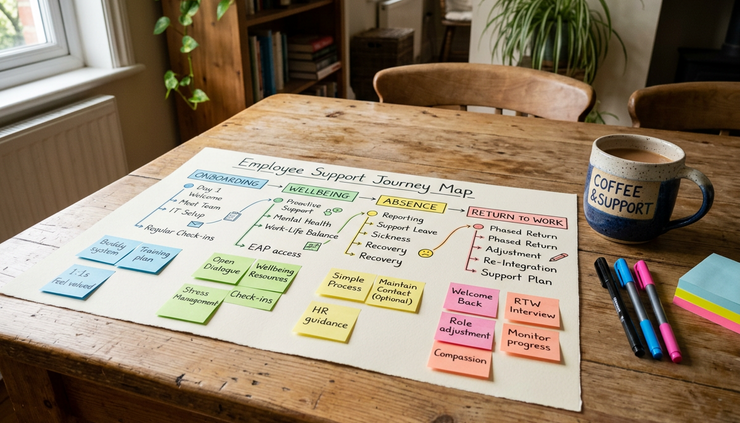
Professional services need employer support that fits high-pressure work
Professional services firms often face a particular mix of people challenges. Workloads can shift suddenly. Client deadlines can be demanding. Teams may be spread across different sites or working patterns. Managers are expected to support performance, wellbeing, compliance, and development while still delivering client work.
That makes employer support more than a nice extra. It becomes part of how a firm protects service quality.
Strong support helps with:
Clearer decisions
Managers know what to do when issues arise, rather than relying on guesswork.
Fairer employee experiences
People receive consistent guidance, regardless of team, location, or manager.
Lower risk
Processes are easier to follow, record, and review.
Better retention
Employees are more likely to stay when support feels practical and human.
For firms built on specialist knowledge, losing skilled people is costly. Replacing them takes time, affects client continuity, and can put extra pressure on remaining staff.
Opterra Solutions can bring structure to everyday people support
A common problem in professional services is not that employers lack care. It is that care is often informal. A partner notices someone struggling. A manager handles absence in their own way. HR steps in when a situation has already become complex.
Opterra Solutions can help turn scattered support into a clearer operating model.
That might include support with:
employee wellbeing pathways
absence and return-to-work processes
manager guidance
policy communication
case handling
workforce data and reporting
practical support during change
The value is not only in having policies. Most firms already have policies. The value comes from making those policies usable in real moments, when managers need to respond with confidence and employees need simple next steps.
For example, if an employee is returning after a period of absence, the best outcome rarely comes from a form alone. It comes from a joined-up process that covers communication, reasonable adjustments where relevant, workload planning, follow-up, and manager support.
Better support helps managers act earlier
In many firms, managers are the first line of employer support. They notice changes in behaviour, missed deadlines, rising stress, or repeated short absences. Yet many managers have had little guidance on how to respond.
They may worry about saying the wrong thing. They may delay the conversation. They may treat the issue as purely performance-related when there is a wider support need.
Opterra Solutions can enhance employer support in professional services by giving managers clearer tools and routes to help.
This can include:
simple conversation guides
escalation routes for sensitive cases
templates that reduce uncertainty
guidance on keeping records
training on supportive, fair communication
signposting to specialist help
The aim is not to turn managers into HR specialists. It is to help them spot concerns earlier, talk about them appropriately, and know when to involve the right support.
Early action often prevents small issues from becoming formal disputes, long absences, or resignations.
Employees benefit from consistency and clarity
From an employee’s point of view, support can feel confusing if every route looks different. One person may receive regular check-ins and clear guidance. Another may not know who to contact or what help exists.
That inconsistency can damage trust.
A stronger support model gives employees a clearer answer to basic questions:
Who can I speak to?
What happens next?
Is this confidential?
What support is available?
How will my manager be involved?
What records will be kept?
When these answers are easy to find, employees are more likely to ask for help early. That matters in professional services, where many people feel pressure to keep going even when workload, health, or personal circumstances are becoming difficult.
Good support also helps reduce the stigma around asking for help. It shows that the firm has a process, not just good intentions.
Data can show where support is working and where gaps remain
Professional services firms often track financial performance in detail, but people support data can be harder to read. Absence, turnover, employee relations cases, workload concerns, and wellbeing themes may sit in different places.
Opterra Solutions can help employers bring this information together in a more useful way.
The goal is not to monitor people for the sake of it. The goal is to spot patterns early and make better decisions. For instance, a rise in absence within one team may point to workload pressure, unclear roles, or a manager who needs more support. Regular concerns during onboarding may show that new starters need clearer expectations and check-ins.
Useful reporting can help leaders see:
where support demand is increasing
which processes cause delays
whether return-to-work plans are followed
where managers need guidance
where policy communication is unclear
With better information, firms can act before problems become expensive or difficult to repair.

Strong employer support protects client service too
People support and client service are closely linked. If teams are stretched, unclear, or unsupported, quality can suffer. Deadlines become harder to meet. Senior staff spend more time dealing with avoidable issues. Clients may notice changes in responsiveness or continuity.
A well-built employer support approach helps firms protect both employees and commercial performance.
This is especially relevant in professional services because delivery often depends on relationships. Clients value consistency. They want to work with teams that know their account, understand the detail, and respond well under pressure.
When employers support their people properly, teams are more stable, managers are less reactive, and client work benefits.
Change feels easier when support is practical
Professional services firms often go through change: growth, restructuring, new systems, mergers, leadership changes, or shifts in client demand. These moments place extra pressure on employees and managers.
Without clear support, change can create confusion and resistance. With the right support, people understand what is happening, where to ask questions, and how decisions affect them.
Opterra Solutions can help by shaping practical support around the change process. This may include manager briefings, employee communication, wellbeing check-ins, case guidance, and feedback routes.
The best support during change is honest, timely, and easy to access. It does not remove every concern, but it does reduce uncertainty.
A stronger support model is a business advantage
Employer support is often treated as a response to problems. In professional services, it should be seen as part of how the firm runs well.
When support is clear, managers make better decisions. Employees get help sooner. HR teams spend less time unpicking avoidable issues. Leaders gain a clearer view of people risks. Clients benefit from steadier teams.
Opterra Solutions can help professional services firms move from informal, inconsistent support to a more reliable model that fits the way their people actually work.
The real gain is simple: a firm that supports its people well is better placed to keep talent, protect standards, and deliver consistently for clients.


